


Hyundai EV Charging: Tips & Tricks
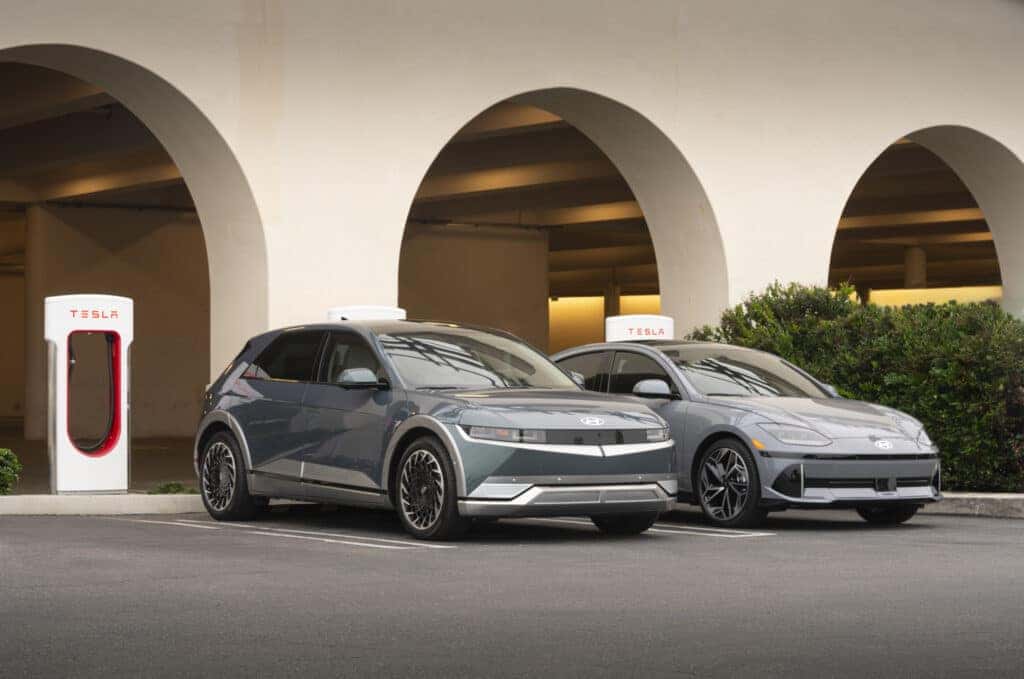
When you’re coming from a traditional ICE vehicle, switching to an electric vehicle (EV) can feel like a big leap; especially when it comes to understanding charging options and managing your vehicle’s energy needs. For those new or potential Hyundai EV owners, we’ve compiled a list of frequently asked questions, along with some tips and tricks to get you up to speed on everything you need to know about Hyundai EV Charging. Read on to learn more with Safford Hyundai of Springfield, VA!
What Are the Different Levels of EV Charging?
- Level 1 Charging: Level 1 charging is the simplest way to charge your EV at home. It uses a standard 120V AC outlet, which you probably already have. However, it’s slow—fully charging your car can take over 10 hours, making it best for overnight charging or when you have plenty of time.
- Level 2 Charging: For faster home charging, you’ll want Level 2. This requires a 240V AC outlet, like the ones used for dryers. A Level 2 charger, such as Hyundai’s ChargePoint® Home Flex EV charger, can fully charge your vehicle in around 7 hours, depending on the model and conditions.
- Level 3 Charging: When you’re out and about, Level 3 chargers are the go-to spot for quick charging. Found at public locations like shopping centers and charging stations, these DC fast chargers use over 480 volts to charge your car from 10% to 80% in just 25 to 64 minutes. The 350-kW, 800V DC ultra-fast chargers can power up an IONIQ 5 from 10% to 80% in just 18 minutes, giving you about 68 miles of range in just 5 minutes.
Do I Need Special Equipment to Charge at Home?
For Level 1 charging, you just need a standard 120V outlet. If you’re looking at Level 2 charging, you’ll need a 240V outlet and a compatible charger like the ChargePoint® Home Flex. This setup significantly reduces charging time, making it more convenient for daily use.
What is the most optimal time to charge my EV?
Electricity is usually cheapest from 11 PM to 7 AM, when demand is low. Check with your power company to find the best off-peak times for your area.
Do I need to charge my EV to 100%?
You don’t always have to charge your EV to 100%. Charge enough to meet your driving needs, whether that’s a full charge for a long trip or just enough for your daily commute.
Can I manage EV charging remotely?
Yes. With Hyundai’s Bluelink app, you can initiate and manage charging remotely. This allows you to take advantage of lower electricity rates and ensures your car is ready when you are.
What Impacts My EV’s Range?
- Driving Conditions: Cold weather, aggressive driving, heavy cargo, and passengers can all reduce your EV’s range. Using air conditioning also impacts range, so be mindful of your climate control settings.
- Driving Style: Smooth acceleration and braking can extend your vehicle’s range. Slower braking, in particular, helps regenerative brakes capture more energy, storing it in the battery for later use.
- City vs. Highway Driving: Unlike gas-powered vehicles, EVs often get better range in the city thanks to regenerative braking. On the highway, where regenerative braking is less frequent, range can decrease.
How Does Regenerative Braking Work?
Regenerative braking converts the energy lost during braking into electricity, which is then stored in the battery. Hyundai EVs, such as the IONIQ 5 and KONA Electric, feature control paddles behind the steering wheel to adjust the level of regenerative braking. Higher levels capture more energy but slow the car more aggressively, while lower levels provide smoother coasting.
Do Hyundai EVs Offer Complimentary Charging?
New Hyundai IONIQ 5 and IONIQ 6 owners can enjoy two years of complimentary 30-minute charging sessions through Electrify America’s extensive network. Additionally, Hyundai is collaborating with other major automakers to install at least 30,000 high-powered DC chargers across North America, ensuring more charging options are available as EV adoption grows.
What does MPGe mean?
Miles per gallon of gasoline-equivalent (MPGe) is a measure created by the EPA to help compare the energy efficiency of electric and gas-powered vehicles. For instance, the 2024 KONA Electric boasts a combined 118 MPGe, significantly higher than its gas-powered counterpart, which has a combined 31 MPG. This means driving 100 miles costs just $5.00 in the KONA Electric compared to $10.13 in the gas model, highlighting the cost savings of going electric.
Are there Home Charging Options for Hyundai EVs?
With Hyundai Home, you can integrate solar panels and energy storage systems with your EV charger, creating a more sustainable home energy solution. The Level 2 ChargePoint® Home Flex EV charger, available in select markets, charges up to nine times faster than a conventional 110-volt outlet, making home charging more efficient and convenient.
Switching to an EV comes with a learning curve, but understanding your charging options and how to optimize them makes the transition a much smoother process. With these tips, you’ll be well-equipped to keep your Hyundai EV charged and ready for any commute or road trip.

0 comment(s) so far on Hyundai EV Charging: Tips & Tricks